Tuesday, January 20, 2009

Seven Days of Budapest.

I'm on top of Budapest, Ma!

Day one.
We had arrived in Budapest late the previous night. We were both exhausted from the long journey and instead of having a brief look around the city that was new to us, we went straight to our hostel, purchased some food and beer and then collapsed on the lounge to watch Christopher Guest films. We awoke finding two new bodies in the dorm room and another sleeping on the lounge in the common room. They had been on their regular night shift at bars across Budapest, a fact supported by their chorus of snoring. When we had breakfasted, showered and were ready to meet the day, it was 11am. For us that was a late start, but our associates would not arise for another few hours at least, at which point it would be already getting dark. More than once I questioned why these people travelled at all if they never bothered to see a city while the sun shines on it. Leaving the pack of diseased livers to snore to their hearts' content, Anouska and I did what we always did when we got to a new place: we walked. Before I am capable of doing anything during the day, especially human interaction, I need caffeine. So, we stopped in a small cafe near the hostel. Like most cafes with character in Europe, it also came with its fair share of second hand smoke. I pray for the day when my clothes no longer smell like a chain smoker. After the kind, elderly lady made us a cappuccino (which conveniently means the same thing in every language), we hit the streets like a proverbial something or another! After a while we found ourselves along the river Danube where a stand was selling goods of a sugary nature. So we treated ourselves to a handful each and then quickly devoured them for the energy that we planned to utilise walking. As shown by the photograph, the Danube has a spectacular view. The part of the river that runs through the city is wide and flanked by some remarkable buildings along its banks. One that caught my eye was the Hungarian Parliament, which is an example of kick-ass architecture, derived from the Latin kickastudite. The style is more commonly known as Gothic-Revival. If you think that the building looks familiar, it is actually modelled on the Westminster Palace, made famous, of course, by a number of English films starring Hugh Grant. The depiction below does not convey the vastness of the building. It is the largest building in Hungary and the second largest Parliament in Europe (after Bucharest, Romania). After a suitable amount of time admiring this building, we walked aimlessly for a few more hours until I was met with the uneasy feeling that I wasn't sure where I was. This often happens when you choose to look at a place instead of having your face stuck in that horrific guide book reading about it. After a few minutes trying to decipher between ads and street names on our Spy Map, I found my bearing and made my way back to the hostel. That night Anouska and I accompanied employees of the hostel and some travellers to a dingy bar where we had to listen to the innate opinions of young Australians and Americans. A lot of the group thought Anouska and I were just friends, because I got hit on by this airhead named Michael (you heard me!), who had clearly not washed during this lunar cycle and Anouska, by a young American with a head shaped like the actor, Ron Pearlman. We made a feeble excuse about feeling tired and made a quick exodus.

kickastudite.

Day two.
Maps can be deceiving, even though they represent the actual space by scale. I looked at our map of Budapest and thought walking up one of the main roads in the city, Andrassy Avenue, and seeing some of the city's cultural achievement including the Opera house (pictured) and Hero's Square, finally ending up in Varosliget, the city's park, might be a good idea. The distance between the hostel and the park is roughly 6km and took us quite a while. Not that I was bothered by the distance. It wasn't raining and the long boulevard sustained my interest with a lot of interesting buildings. I had always thought of walking as a bit of a chore, a thing to do when you don't have any real transport to get you from one point to the next. Something that middle age women do out of denial about getting old and putting on weight because of their slowing metabolism. On this trip, I found out that walking is quite relaxing. It clears the mind of all its white noise and makes the body feel youthful and awake. My mind wanders freely like a breeze and I find discovering more about myself and my life. It also might have to do with being in a foreign environment, making me be more aware of myself and the world I inhabit. Philosophising aside, I love walking and having such a visually stimulating street to walk down as the Andrassy was a pleasure. After a discernible amount of time had passed, we found ourselves at Hero's Square, which has surrounded by Art's hall, the Museum of Fine arts and Varosliget Park. You see the Millennium Memorial in the photograph at the end of the paragraph. On the centre column, the Archangel Gabriel stands above the seven tribal lords who led their people to modern day Hungary in 896AD. If front of the memorial is the tomb of the Unknown Solider. This place left a very strong impression on me. Judging from the people in the photo, you can tell that the square itself is very large and that the magnitude of the monument would strike a person with awe. It did with me. It made me feel that history is an expanse so enormous, it is beyond my understanding. After that, we had toured around the park's grounds. They had cleared some of the lakes that for a small market and a ice rink. There was also a small pond that was heated, steam billowing off its surface on this cold day. There was a gaggle of ducks there, swimming happily in their artificially heated environment. That evening in the hostel, Michael and the American with the Pearlman head started having a discussion about Nietzsche which immediately gained my attention. However, I was soon disappointed when they started to quote the author out of context from a portable reader and stating that his ideas are new and innovative. John, another traveller from Australia and I, rebutted their stupidity, which led into a full scale and heated debate. When the bad head, who calls himself a doctor, even though he is 19 years old, began saying Existentialism was the newest thing on campus, I knew I had to find the nearest blunt object and beat him to death. When asked, he couldn't even clearly define existentialism. John and I were accused of being moulded by our tertiary education into thinking in specific terms. I was even called elitist, which is the first time anyone who graduated from Pinjarra Senior High School has been called that. So, in defence, we opened up a can of obnoxious, which is the only way to deal with idiotic punks who misquote great writers.

Pearlman's head is all kinds of wrong.

http://www.liljas-library.com/2004/

Day 3.
Recommended by a staff member from the hostel, we decided to hike up to the top of Cellert Hill. It is named after a bishop St. Gerald who was martyred by being put inside a barrel during the pagan rebellion of 1046 and rolled down the hill (you're not alone if you think that's hilarious). I think they should rename it. The hill gives a fantastic panorama view of the city and on a clear day like the one we were blessed with, you can see for miles in every direction. At the west end of the hill, near the citadel, is a parapet that has a statue perched a top a tall column in the middle, with four others on each corner of the parapet. The statues are mythological themed ( i.e Hercules killing the Hydra, which is a popular motif throughout Europe). The statues overlook the city's landscape like silent guardians, forever watching the events in Budapest unfolding. It is a lovely place, well worth the long haul up and the illiterate and senseless graffiti you see on the way. After a wonderful lunch of ... we decided to relax for the rest of the day and get a early night because we were leaving for Slovakia the following day. That was until later that evening, when we were told by other travellers that there was a train strike that had brought the Hungarian railway system to a halt. If we wanted to leave, it was not going to be by train. Realising we had two train tickets, we caught two metro trains to the International Train Station only to be told our tickets would be refunded for the day that they were valid, which meant tomorrow. Annoyed, we caught two more trains to the bus station for another option. It was not open. We discovered that there was a bus leaving for Bratislava the next morning and that the ticket office was open at 6am, half an hour before departure. The plan was to catch trains to the International Train Station and get a refund, before going to the bus station and hopefully getting tickets. It was going to be an early start, so we went back to the hostel, set our alarm and settled in to sleep. If things were not stressful enough for us, our problems were further compounded by Spaniards staying in the hostel. The Spanish have a special relationship to the night. This meant that after they had made dinner at midnight and watched television at a high volume for a couple of hours they decided to go to sleep. We still hadn't slept much at this point, but things were about to get worse. From as far as we could discern, the three Spaniards who were in our dorm room had dropped a few mind altering substances and were acting strangely. What do I mean by strangely? What do you think of someone who opens their metal and therefore noisy locker every 30 min until 4am, searching for who knows what! Or what about talking and laughing while everyone was asleep? How would you feel about someone who shone their flashlight in your face repeatedly and had sex in a dorm room of eight people? I let them know how I felt about it when I loudly exclaimed to Anouska at 3am, "I am going to sleep on the couch. These f*%kheads won't shut the f&%k up!" Having a great command of the English tongue as ever, I stormed off into the common room, where I found a number of possessions belonging to the Spaniards, carelessly left there from a few hours again. Being alone in the room, I decided to take my revenge and hid several said possessions, including a pair of prescription glasses, in the exchange bookshelf, where they would not find them. The lesson they would learn upon waking was NOT to mess with me, for I am the king of petty revenge!


About as eloquent as my tirade towards the Spaniards.

Day Four.

Our alarm went off at 4am. We had roughly one hour's sleep. I made a lot of noise leaving the dorm to repay our Spanish roomies and made our way to the common room for a quick breakfast and a cup of tea. At this point, I discovered that Anouska was throwing up and had been for the last couple of hours, which suggested a virus or stomach bug. Anouska would not hear that she was unfit for travel that day and we both headed off to get our refund. That done, we commuted back to the bus station and arrived to a horde of stranded travellers like us all trying to leave Budapest. We waited in line for twenty minutes only to find that the bus had just departed and we would have to come back tomorrow. We had planned to go to Zedir, a small town in Slovakia to ski and snowboard and play with the hostel dog that appears on their leaflets, but we had to cancel due to the circumstances. Hoping to get there following day, we made the most of another day in Budapest. Anouska slept and I walked around aimlessly for a few hours before succumbing to the lack of sleep myself. Anouska accompanied me to dinner that night, although she didn't feel up to eating yet. I ordered a meal called, "Gypsy Roast" I was not sure what that meant, so I checked to see if the 'meat' had any complimentary extras like fingers. Assured I was not eating a real gypsy, I quickly downed a most delicious roast pork dinner, while Anouska had some soup. Shortly after leaving the restaurant Anouska vomited alongside an expensive looking and more importantly, clean car. Later that evening, after gorging myself on a block of chocolate, I discovered, much to my horror, that I did not feel so crash hot myself. Twenty minutes later, my head was in the toilet bowl removing the contents of my stomach: chocolate and Gypsy roast


Gypsy: the other white meat. Image courtesy of:
http://lesliebradshaw.com/?cat=86


Day Five.

Of intervals ranging between 30 min and an hour I went to visit my good friend Mr. Towel Bowl and showed him how much I liked him, which was rather a lot. When I wasn't visiting my friend I was sleeping and trying to keep liquids from magically reappearing out of my mouth. This went on until around 10am in the morning, ending 12 hours of vomiting. Now I simply felt awful and decided to take my mind off it by watching six episodes of 'House' in a row. You know what I learnt? Under that hard, sarcastic exterior, House has real emotions and a need to connect with other people. It's about all I got out of that day sadly, as I spent the remainder resting and trying not to think about food and the fun I would miss in the snow of Slovakia.

.

House cares.

http://iamatvjunkie.typepad.com/i_am_a_tv_junkie_a_blog_f/2007/10/house-blows-up-.html

Day Six.

Not much to report, except to say "Thank you for Smoking", is a great film, with a stellar performance from Aaron Eckhart. Anouska and I also occupied our time with playing the hostel's X-BOX. Later in the day I felt like eating and had some take away Chinese, which in hindsight, was not a very good idea.


Day Seven.

An early start of 4am to give us ample time to make the 6:30am bus out of Nepliget Bus Station. Today we were finally going to leave Budapest. It was a triumphant feeling to know that despite our misfortunes in this city we were going to be free from the unlucky hold it had on us. It wasn't long before we were fully dressed and ready to depart. We took one last look around the hostel that had been our prison for the last few days and quietly closed the door behind us. In the elevator smiles broke across our faces as we realised that by the end of the day our feet would be walking on a different patch of land, in another country. That was until that two-faced bitch, fate, intervened again. On the second floor, the elevator abruptly stopped. I pressed the button for the ground floor and nothing happened. I pressed it again, but to no avail. I changed tactic: I yelled at it, but for some reason it failed to respond to my angry demands. We had to face a very inconvenient truth. Were stuck in an elevator on our way to the bus station, which was going to take us out of Budapest and Hungary. I had a sudden sense of dread that perhaps I was doomed never to leave this place. That I would grow old and die here. But before Budapest could rob me of my will to leave, I was going to give it on last shot to escape. We hit the Alarm and screamed for assistance. Anouska commented that she would hate to be murdered in this building as our energetic cries for help were not heard. Perhaps if I had not obnoxiously called out, "comprehendo, fuckito!" someone may have assisted us. After half an hour of presuming someone would hear either us or the alarm, we tried the emergency button, which dialed a phone number. A woman responded to the call in Hungarian and we told her we were stuck in the elevator and could she please help us. She replied, "No english", and hung up. By this time it was 5:45am. We had been in the elevator for over an hour and it looked like we were likely to be in it for quite some time, thus missing our bus once again. When all hope was lost we started to hear voices in the stair well. Some drunken travellers were on the way back from a big night and stumbled upon two people with two large backpacks stuck in a lift. One of them asked, "What should I do?" which was perhaps the most moronic question to ask someone trapped in a lift. I had to bite my tongue from saying, "do a little dance while singing the Star Spangled Banner". However "Call someone for help", seemed to register to him. He disappeared up the stairs and did not return. Ten minutes later a man came down and called the emergency number for the elevator and twenty minutes later, we were free. It was close to 6am and we were anxious about missing our bus, so we woke up a staff member from the hostel and asked her to call a taxi, explaining we had been stuck in a lift for an hour and a half. This did not exlicit any sympathy from her. Actually, she was rather annoyed at being woke up. The taxi came and we made it to the bus station just in time for the bus. When the bus pulled out of station and headed out of Budapest, smiles crept across our faces. We had escaped Budapest.


One of the many things about Budapest that confused me.

Monday, January 12, 2009

Goran Ivanisevic and Crazy Communists.

Disclaimer: This post features nothing about the famous Croatian tennis player, Goran Ivanisevic, I just thought it sounded cool as a title. It does however, include antics from a crazy communist. Enjoy.
.
A serious lack of toliets in Croatia.
.
We crossed the border from Austria into Slovenia by train shortly after noon. An elderly woman opens the carriage door and sits down on the bench opposite us. She begins speaking in Slovenian and I tell her I only speak English. She replies, "Oh, English book," and launches into a long dialogue in Slovenian. At the end of her speech she chuckles and then was silent for the rest of the trip, except for the occasional guffaw from seeing me asleep. We thought she was eccentric until we arrived at our "bed and breakfast" in the Slovenian capital, Ljubljana , where we were met with our host, Patricia. She looked a little bizarre, like an American flapper or Liza Minnell well past her prime. Our first impressions of this woman was of someone lamenting over the fall of communism with tears running down her cheeks. She applied eye liner so thickly that it looked like she was weeping black tears. She genuinely believed that the state knew best and that people living in the west only lived to work and that capitalism made people miserable. But that is only skimming the surface of this strange woman. She rarely slept, cleaned the house after midnight and turned off overhead lights while we were reading because she said it made her suffer and that light from the lamp gave off a more romantic luminance. Considering it was a bed and breakfast we expected a little privacy, but she came into our room while we were not there and tidied up, putting back our belongings into our bags. After two nights we were glad to see the back of her. But we did teach her a lesson. Communism is about the distribution of capital, right? So, I stole her tea bags and Anouska stole some of her chocolate. Then for good measure we were very loud when we left the apartment, waking up her neighbours at 5am. A fat, balding man ran out in his underwear and stained shirt to abuse us. We just kept walking.

Recognition. Finally.

We returned to Ljubljana within in a week, so I will discuss the city later on in this blog. Let me discuss however the predicament Anouska and I found ourselves in Slovenia. From the onslaught of our journey, we decided not to plan much. The only thing we booked in advance were our flights. This was so we could keep our itinerary open to changes, so if we really liked a place we could stay on and conversely leaving a few days earlier if a place gave us the shits. We had a rough idea of the places we wanted to visit and what dates we wanted to arrive at them. Our plans first changed in London, when we decided not to go to Spain, Portugal and Morocco in favour of Eastern Europe because of the pathetic state of the Australian dollar. Then in Ljubljana we further crossed Turkey and Italy, owing to costs and transportation. Our next decision was how to get to Greece. Should we go South through Montenegro and Albania, like our communist host suggested, or catch a ferry from Venice to the Greek port of Patras. We chose the latter. We booked the ferry and purchased a flight out of Athens to Valletta, Malta. However, a few days later when we were in Croatia, riots broke out in Greece and a 15 year old boy was shot by the police and dissent flourished throughout the country. Greece was suddenly a very undesirable place to be. So, we cancelled our ferry and changed our flight to Malta, costing us just under 200 dollars each. Losing a significant sum like that was a bit of a blow, but at least we avoided a potentially disastrous situation, like being stranded in Greece. So, we decided that if we can't have Christmas and bring in the new year in Greece, then we will go back to Eastern Europe. "Who needs Greece anyway", I said to Anouska, holding back the disappointment in my voice.


Babushka lady laments over our cancelled plans to Greece.

From Ljubljana we caught a bus across to Zagreb, Croatia. The three hour journey was filled with picturesque images of small houses on snow capped hills. It was rather lovely, but I think Anouska and I were more interested in who could get the best score on the Nintendo DS. That was until I accidentally dropped it on the bus floor, thus rendering it into an expensive paperweight. It was a sad moment, like losing a Kennedy. After a short eulogy detailing my numerous high scores, we turned our minds to our next destination: Zagreb. We arrived at the bus station to the usual welcoming party of drug addicts, homeless people and Gypsies. I am afraid that if I don't give the Gypsies my money they will curse me and I will start sprouting copious amounts of hair out of my ears and nostrils. A short tram ride later we dump our heavy packs down in the hostel and headed to the city centre. Our tram travel was amazingly cheap, because we purchased a one way ticket, which costs 2 Au and never once validated it for the four days we were there. They call it fare evading in Australia, but I call it fair evading, because we didn't get caught!

Near the town square.


The suburban areas of Eastern European cities rarely have any aesthetic value, especially if they have experienced communism at one stage. I believe the world would think differently about communism if it did not build such awful block buildings. It would also help their cause if they did not have lobbyists like our friend Patricia. When you get closer to the city centre of Zagreb and thus closer to buildings that predate communism, the wonderful charm and character of the city starts to reveal itself. Even the vandalism here is superior to other cities. One tag read, "everything that is sacred comes from youth", which is rather poetic in my opinion. With lovely baroque buildings (which I am becoming very fond of), the skyline is pitted with such gems as the Ban Jelacic Square, St. Marcus church (pictured), Lotrscak tower, the National Theatre and the cathedral of St. Stevens. This city in Croatia was not a place I expected to have such terrific architecture. Then again, travelling is all about dispelling the assumptions you have. What I think is the greatest feature about Zabreb is its spacious design. The city is so open. The streets are wide compared to the narrow lanes found in most European cities. Parks, botanical gardens and large squares comprise a great deal of the cities expanse.

The Croatian National Theatre.

How could I not enjoy a place without euro-inflated prices? We had some terrific three course meals for around 5 euro each, which is superb. I even had a huge plate of grilled calamari, salad and fries for 7 euro. Anouska ate a pizza the size of a car wheel for the same price and was so overwhelmed at the enormity of it she could not finish it and had the left overs for breakfast. Coffee is ridiciously inexpensive at 1.5 au a cup, which is a terrible thing if you have a slight addiction to the drink as I do. Usually price would limit my caffeine intake, but when it is this cheap you find yourself wandering into pubs and coffeeshops more often then you would like. One thing I have discovered in my travels to Eastern Europe is that it holds a entirely differently mentality to age and male companionship. Coffeeshops are usually filled with groups of old men drinking espressos and having lively debates. It is great to see that the aged are not segregated in these societies that they are in Australia. The elderly in Australia rarely leave the house out of fear and only then are forced from their safe havens out of loneliness. But in Croatia and other places in Eastern Europe, they are a culturally accepted member of society and people do not think it is strange to see them enjoying themselves in a pub or cafe. And men can socialise freely without the stigma of homophobia. I think people would feel less alienated in a environment such as this and that is what makes these places special.
On our penultimate day in Croatia, we discovered a park situated out of the city centre and close to our hostel. Maksimir Park is the largest park in Zagreb and one of the most beautifully curated parks I have ever seen (Hyde Park included). We were there when Autumn was becoming winter and brown leaves covered the long, meandering footpaths and the sky was a murky grey, like in an Ingmar Bergman film. Anouska, as well as many others think I am crazy for loving this described setting, but my body and temperament is well suited to these conditions. Maksimir Park has a subtle grandiose that with its impressive boulevard, tall trees, sweeping hills and its zoo. Unlike Hyde Park, the park feels like a natural setting, which I think is a credit to the planners. But perhaps I am too conscious of the fact that Hyde Park is in the middle of a huge metropolis. Maksimir Park is a peaceful and serene place, which is not at all justified by the photographs posted. We went as the sun was setting (probably around 4pm) and the sun was hitting the trees and creating a gyroscope of colours that were simply divine. It was a fantastic way to end our visit. That evening, we relaxed in front of the television, watching Monty Python's 'Life of Brian'. We got talking to the hostel owner, who incidentally lived in Perth for a while and has family there. She must have taken a liking to us, because before we knew it, home-made savioardi and grappa was thrust upon us. The grappa was made from pears and it is the strongest liquor I have encountered. I only had a few before feeling rather tipsy. That night I slept like a baby.

I am child trapped inside an adult's body.

After a painfully brief visit in Croatia, it was time to move again. We were heading back to Ljubljana again for a few days en route to Venice and then Greece. When the plans of the latter were shelved, we extended our stay in Slovenia a few days to decide what to do. We were unable to properly see the city during our stay there as sapping cold and relentless rain made it hard to stay outside for more than a couple of hours at a time. So, we bided our time planning the rest of our journey in coffeeshops and visiting the art gallery, which was, if I may so blatantly put it, rather shit compared to galleries we had seen in the past few weeks. Despite the rain, Ljubijana like Zagreb has a lovely city centre that has all the romance of Paris, without the Parisians. In other words, it's fantastic. On a particularly wet day we decided to trudge up a hill to see the thousand year old castle and see a terrific panorama of the city. It was a hard trek up the muddy slope, which was surpassed in difficulty by the walk down, nearly ending with both Anouska and I falling on our behinds on a number of occasions. It was a shame that I was unable to explore more of this country, but time restrictions and weather made it unfeasible. I am hoping to return to this place one day to do it justice.

A short intermission from the rain.

Our mini tour of the Slavic nations was over. We were now heading further east, to Budapest, before making out way back to the Czech Republic for Christmas and then Poland for New Years, before returning to Budapest to fly to Malta. It wasn't the most logical plan, as we were zig-zagging all over Eastern Europe, but travelling with the extra ingredient of chaos makes it that much more exciting.

Oh, what a feeling! Croatia.

Monday, January 5, 2009

Chasing John Irving

SPECIAL GUEST BLOGGER: ANOUSKA.

The great John Irving.

One of my favourite authors, John Irving, features Vienna in most of his books (eg. The World According to Garp, The Hotel New Hampshire and Setting Free the Bears), because of this I felt rather familiar with Vienna and had memories of it before I even got there. I feared that I would be disappointed by Vienna in reality because it could not correspond with John Irving's depiction of it.


Magnificent Vienna.
.
The Vienna I found was not the same as John Irving's Vienna. However, it certainly did not disappoint. Firstly, the place is overwhelmingly beautiful. Everywhere you turn there is impressive architecture or a magnificent sculpture. Even the apartment buildings have detailed facades. Coming from somewhere like Perth where most of our buildings are depressingly functional and modern I could not help but be charmed by the aesthetic of Vienna.
.
An example of a beautifully adorned apartment building.
.
That's not to say that Vienna is somewhere that is untouched by the ugly effects of globalisation. We found the main street is the same as most other cities' main streets in that it was marred by the neon signs of the usual collection of multinationals. The symptoms of globalisation became particularly apparent on our first day in Vienna when we wondered around trying to find a cafe where I could have an authentic Vienna coffee experience like those described by John Irving. This search went on for a couple of hours as we walked around the main avenues searching for a suitable cafe but all we found was the usual suspects (places like Starbucks). When we had given up all hope of finding anything reasonable we started wondering down small streets in a residential area and luckily stumbled across something resembling a genuine Viennese cafe. Inside it was chockingly smokey, a few people sat by themselves reading and the decor was a strange mish mash of ugly tiles, polished wood and gold rimmed mirrors. A gruff woman took our order of coffee with schlagobers (fresh whipped cream) and a strawberry cake. When she brought our coffee over and Daniel reached for the cup that she had begun to place in front of him she barked "Ladies first!" and gave the cup of coffee to me instead. I have been told that grumpy service is a given in Vienna and in this respect the cafe did not fail. However, I always appreciate when someone tries to teach Daniel some manners. We drank our coffee (delicious) and I most generously shared the cake (also delicious) with Daniel. I felt glad that I had a cafe experience closer to John Irving's description and totally unlike Starbucks.

The perfect Viennese coffee.

The only reason that I knew the word schlagobers was because it featured a lot in 'The Hotel New Hampshire'. Whilst I usually only manage to learn hello, thank you and sorry in most languages, my vocabulary in regards to food is by comparison is quite extensive. I cannot claim that this is due to any gift for languages, but rather stems from my talent for piggery. I do not know why guide books and their companion phrase books do not feature more words in them for food, but then again we have found guidebooks to be generally useless so this deficiency should not come as much of a shock.

Enjoying some delicious wurst. No "witty" lewd comments allowed.


But back to food, my favourite subject and pastime. We had been told that Vienna was replete with take-away joints (not entirely dissimilar to the fish and chip shops at home) where you could get a wiener schnitzel and chips rather cheaply. Whilst we found this to be the case we also found that the Schnitzel type places were outnumbered by Kebab Stands. Our Texan roommate, Chris, was rather fond of these places as he would at least thrice daily trot off to "Hit up the Kebab Stand!" as he put it. At first I thought that he was labouring under the misapprehension that kebabs were the national dish of Austria. We soon discovered that it was our portly friend's desire to eat as cheaply as possible that led him to kebabs because on his first day in Vienna he paid 10 euros ($20 aus) for a piece of Sacher Torte and had subsequently sworn himself off Viennese food. We, on the other hand, were blessed with common sense and avoided twenty dollar cakes in favour of cheap and plentiful street food - roast kartoffel, and the ubiquitous wurst. The Christmas markets in Vienna did not hold a candle to the magical ones in Olomouc. This is because the Viennese markets are erected purely to allow tourists to spend their money on useless junk (no sane local would pay 12 euros for a candle that looks like a glass of beer). The one redeeming feature of the markets was the plentiful and cheap (by Viennese standards) sweet treats that inspire nostalgia for one's childhood. Daniel and I spent an afternoon eating fairy floss and toffee apples and then running around like rabid children on a sugar high.

Daniel is dwarfed by a formidable stick of fairy-floss.

By the time we had got to Vienna, Daniel and I had worked out our approach to travelling. To summarise; we like to walk. When we first get to a city we spend a day just walking around. When we are a looking for a restaurant and there is nothing but expensive tourist traps we keep walking and walking until we find something reasonable. In so doing we feel we get to see more of a city and at the same time manage to entirely avoid the cost of public transport. Unlike most travellers, we have both lost weight, despite consuming large quantities of fried food and sweets. In keeping with this approach we spent a rather lovely (and exhausting) day walking to the Belvedere. I plotted our route on the map and estimate we walked around 16km that day - not bad for someone as unfit and unused to exercise as I am.

The upper Belvedere Palace - worth the walk.

The Belvedere Palaces contain the world's largest collection of Gustav Klimt's paintings, who is one of my favourite artists and most definitely my favourite Viennese artist. We frolicked in the gardens and admired not only the artwork but also the grand examples of baroque architecture that are the Belvedere Palaces. One of my unexpected favourites from this museum were Franz Xaver Messerschimdt's "Character Heads". Messerschidmt was a brilliant and non-conformist sculptor who in the last years of his life devoted himself to creating 52 "Character Heads". These works would be considered quirky even by today's standards, but they were amazingly created by him in the 1770s.


Character head - "The Lecher"

My favourite Klimt - "Danaƫ" 1907.


The evening following our visit to the Belvedere, Daniel explained to our roommates that the reason we were so tired was because of our wish to walk everywhere. One of them, Elliot, thought it was really stupid and said as much. Then he told us about how when he was in Amsterdam, all he did was smoke weed and drink and how now, as a result, he has a really great story to tell people. I'm still unsure what significance "the story" holds or why anyone would be impressed that you spent all your time in a city, rich with cultural and artistic treasures, in a drunken and stoned stupor. But this was probably the least repugnant idea that this charming fellow shared with us. When he then asked us where we had travelled to so far and we mentioned that we had been to India he said, "I'd never go there, there as so many Indians in England that there's no point". I laughed, hoping that this was a benign joke made in bad taste. However, I was sadly proven wrong over the next couple of days as the racist comments became more overt. I finally told him exactly how disgusting and pertinently stupid his ideas were, and thankfully as a result, he ignored me for the next day until he left. I am not sure why someone so clearly afraid of cultures different to his own would want to travel. But then again, clearly he was not particularly interested in exposing himself to anything cultural while travelling, unless local beer and hallucinogens count. Yes, we have met a lot of intelligent and culturally aware people while travelling, but by the same token we have met just as many, if not more, idiots like Elliot. Perhaps these people could somehow be segregated from everyone else? Or maybe not issued with passports?


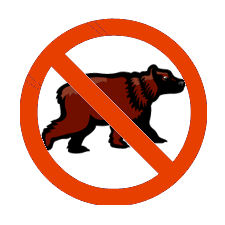
John Irving's novels usually have a bear in them, particularly the ones set in Vienna. And did I sight a bear whilst in Vienna? Alas no, but I did see a ginormous dog that I thought I could pass off as a bear in a conveniently blurry photo. In 'The Hotel New Hampshire' John Irving laments about the ways in which Vienna has changed over the years and that the prohibition of bears on trams is one of the things he mentions along with the homogenising force of globalisation. Even tough Vienna has changed since the 1960s of Irving's novels, it is still an enchanting city, and I shall definitely return at the very least to try and see a bear.


What I imagined could be The Hotel New Hampshire.

Thursday, December 11, 2008

I Heart Olomouc

Balloon seller at the Christmas markets. He has a cheeky grin!


During our stay in Prague, Anouska and I became increasingly tired of the 'big cities'. Since our trans-continental adventure began, we have craved authentic experiences. We got our wish in Vietnam and India, but in Europe it was harder to find. This is due to the highly developed nature of European cities and also because many European cities are geared towards attracting tourists, which basically means creating an artifical simulation of what is authentic. This is the reason we like to stay outside the city centre. Here, you get a better feel for a place. The pubs and cafes are where locals frequent, and as a result, you get better food, which is also significantly cheaper. My friend, Christina, hearing my plea to get away from the urbanised jungle, suggested we would find what we wanted if we visited one of the small Czech towns. After a search on the Lonely Planet forum, Olomouc kept coming up. People were commenting that it was a lovely, student town, cheap and untouched by tourism. It sounded almost too good to be true. So, we packed our things once again and caught a train out to the town that is apparently a modern utopia.


The hostel was called "Poet's Corner" and was on the 5th story of a building near the centre of town. Anouska unable to carry her her pack up, graciously allowed me to carry it as well as mine up for her. I cursed all the way up. When we finally got to the floor, having climbed innumerable step, I was expecting to see the St. Peter and the Pearly Gates, but all we found were more Australians. The hostel was run by ex-pat Australians. Unlike previous experiences, they were very pleasant and gave us a run down of the town and things to do and places to eat. It is also here that I met Jarrod, one of the employees from Melbourne, who was a kindred spirit in all things silly and who shares the same enthusiasm for 80's pop songs and the Beatles as I do.

"Hey Daniel, let's request "Come on Eileen" again! I don't know the words, but that doesn't matter".

Greg, the owner of the hostel is a mad ice-hockey fan. Every home game he rounds up his guests and takes them to see his beloved Olomoucs in a league game. The Czechs are masters at this sport. When Canada, the world champions lose, it is usually to these people. So we were expecting a good game. We found our seats, hugged ourselves tighly against the cold coming from the rink and sipped on our 1.5 Au beer waiting for the game to commence. Coming from a country where ice skating is a rare novelty and anyone who wished to pursue a career in it would be laughed at, I was amazed at the skill and dexterity these athletes displayed. I was also enthusiastic about the promise of brutality, of men being forced up against the barrier, in their mad frenzy to get the puck. The defining difference between a lot of sport in Australia is that it is fast paced. The game is divided into three periods of 20 minutes. The puck travels at great speeds, so it can be one down one end in a number of seconds. Being Australian, it wasn't long before my competitive spirit came out and I was cheering for the red-white Olomoucs and screaming at the opposition, calling them 'those wankers in blue'. The game lagged for the first half, but I didn't mind that too much as I enjoyed the cheap beer and the occasional man being squeezed into the glass. The second half yielded more entertainment with Olomouc holding out their lead against the blue wankers to take the game 4-3.

Anouska, taking an 'interest' in the sport.

Following the game, the group of travellers, consisting mostly of Australians, headed to a local brewery for a meal. Anouska and I ordered some potato pancakes and 3 pints, to go with the 3 we had already consumed at the game. From there, the group headed out into the snowfall to go to the best student bar in town, "Vertigo", which takes its name from the 1958 classic Alfred Hitchcock film starring Jimmy Steward and Kim Novak. It even has a print of the film on one side of the wall. It is a smokey, bohemianesque bar, which has 1.5 Au pints and plays a lot of rock and roll music from the 1960s. It was here Anouska and I further downed 3 pints, making the grand total of the evening 9. That is almost 5 litres of beer each. The night went from mild to wild when Jarrod and I initiated the trend of chair standing when "Come on Eileen came on". From here the night descended into a rowdy rabble with a group of very drunk Australians and Czech students dancing and singing along to classics. We went home as the sun was rising. I woke up feeling fine, despite the indulgance of the night before. Anouska however, could not manage to leave the hostel before late afternoon. We didn't learn our lesson obviously. Two nights there we were there again doing the very same thing.


Jarrod standing, me with a stupid face, Alex at the back and Simply Red in the foreground. He didn't like being called that, or being told (by me) that Simply Red is really ugly. I wonder why?


Judge for yourself.


If you're an architectural enthusiast like myself, you will find yourself leaving your travel companion to deal with their self imposed sickness to walk through the cobbled streets for a few hours to admire the design and beauty of the buildings and the statues of Olomouc. It is very similar to Prague with old Gothic buildings nestled in narrow laneways, except for one noticeable difference. Tourism has not touched upon the innocent beauty of this town. There is only one Macdonalds in the town centre and no Starbucks,

Burger King or Kentucky Fried Chicken. Where many cities have large metal structures twisted into indiscernible shapes and called "art", Olomouc has stuck with baroque stone structures, a mark of its cultural refinement. I think the true character of Olomouc comes out at night. Walking down the dimly lit streets is like being in a Franz Kafka story. The absence of neon lights in place of low watt floodlights brings out a nocturnal atmosphere that is unique to this place. The picture to the right emphasises the errie mis-en-scene that would probably occur in a David Lynch film, but which happens every single night here. But when one finds themselves separated from the drinking group at 4am in the morning, somewhat intoxicated and lost, the streets turn into a Gothic nightmare, where demons lurk in the shadows, the tortured facs of stone gargoyles seem almost alive and every face you pass stares at you in surreal disbelief. It might not seem so from the comment just made, but I am completely in love with this place. It is just so interesting. Give me some money and something to do and I would never leave.


Town Square at night.

You would not expect a small town in the Czech Republic would be home to an amazing cultural life. When you travel, you learn to assume a little less, because the world is so large and diverse, that anything is possible. The arts scene in Olomouc is like a university campus. Something is always on. If it's not jazz, then it plays, art galleries, independent films and tribute bands. They even have performance art at pubs. At pubs! I swear! Imagine seeing all that in Perth! I know, it's hard. And when you hear tribute band, you automatically think substandard, but the Doors group we saw was fantastic. The lead man came on stage, with long locks like Morrison himself, spoke to the audience in Czech and launched into an almost 2 hour set, doing the best impersonation I have ever seen. This little place in the middle of the Czech Republic with a population of 102000 should be renamed the cultural capital of Europe! It is absolutely brilliant.

I praise this place so much that the mayor should save his time and hand me the keys to the city now. If this place wasn't ideal enough, a paragraph concerning the cuisine will further promote this city as a modern day utopia. My favourite dish here was "Gossiping Aunt's Potato Pancakes", which was potato pancakes cooked with spinach, pork and cheese. The quality of the food overall is, like most things, better than in Prague. If Anouska wasn't drooling over pig knuckle, then she was exclaiming the culinary prowess of the pork stuff with cheese or the peach chicken. They not only make fine food, but sweets as well. Cafe '87 is home to the famous Chocolate pie, a delicious dark chocolate sensation that will wet your mouth and melt your heart. You can also pick up a lovely honey cake or even different cheeses covered with fruit sauces from the jazz club. There is an established dining culture here, which accounts for the reason why eateries can be found all over the city, from pubs to cafes to restaurants. Even one of the tea houses do food. I suspect the abundance of food is why Anouska has taken so well to Olomouc. I am very surprised that we have not gained any weight.


The perfect coffee companion.

Christmas is a time of friends and family. This doctrine is strongly followed in the Czech Republic. This can be seen in the festivities at the Christmas market of the town square. Hundred of small, wooden stalls are erected selling all kind of seasonal treats from hot wine punch to children's toys. The Olomouc christmas markets has a loving and warm atmosphere that I have never seen before. Families come to celebrate the joy of Christmas, while couples kiss under the lights. Old friends share a hot wine punch and pass on their season greetings. It is a beautiful display of human interaction. It is sad to think that if this kind of event was staged in Australia, it would be hijacked by drunked youths. I am glad to see that there are places in the world that Christmas still means something other than material gain. I believe we still practice that believe individually in Australia, but as a society the spirit of Christmas is nothing more than a excuse of excess.


Give me that one, and that one.

Monday, December 8, 2008

The Unbearable Coldness of Being (in Praha).

My poor frozen ear lobes.

Our bus ride from Amsterdam to Prague was 16 hours. For once Anouska let me sit by the window and I drifted in and out of sleep with my head hitting the glass as the bus rolled along through Germany. Some turks behind us played horrid Turkish pop music and the Germans complained about the seating arrangements. It was worse than the United Nations. When we arrived, it was the afternoon and I was as tired as I had been in a long time. Not just physically tired, but world weary. I was hungry as well and I felt, for the first time, like packing up my stuff and going home. When we got to "Hostel Elf" we had a long nap, which restored my energy and frame of mind. I suddenly realised I was in Prague, in the Czech Republic, home of Franz Kafka and a novel I am quite fond of, "The Unbearable Lightness of Being". It is also a country where beer is so plentiful, that it is cheaper to buy beer then it is to purchase water. I have a child-like fascination when I arrive in a new place. I am excited like a dog being told WALK! After our nap, we hit the streets near the hostel and found a pub where we settled down for dinner and beer. One of remenants of communism in this country is that they state on menus the weight of the meal. This has to do with the now defunked rationing system. Displaying the weight of the meal on the menu is very deceiving. When we ordered a meal of 200 grams, we were not sure whether it was going to be enough. Should we order a side to accompany? What about an entree dish? These were questions we asked ourselves. Of course, that immediately changed when the dish was served. Instead of the menu stating "duck, potato pancakes and cabbage, 200 grams (which is what I had)", it should have said, "a fu&king big duck, served with a field of oil drenched potatos, with a large truck filled with cabbage. And this is a traditional Czech meal? How are they not the size of houses? How do their digestive systems survive against such a gluttoneous onslaught? I learnt after a few of these meals that the stomach is a miraclous thing. That after a while, you can get used to anything. By the end of our stay in Prague, Anouska and I could easy eat a meal like this, as well as downing several litres of beer with it. We were in the Czech Republic, where quality and quantity are not so different.


That aforementioned meal was just a small example of what is on offer in the Czech Republic. When I say small, I do not mean that there are a lot of different things to eat, but there are a few things that can be eaten a lot of different ways. Pork for example, can be served roasted, smoked, grilled, stuffed in dumplings, fried, beaten and wrapped in cheese and bacon, made into soup, crumbed and stuffed inside potato pancakes. Now I am starting to sound awfully like Forest Gump's friend Bubba. Lovely as their meat intensive diet may be, it was not long before we were crying out for vegetables. What I would have given for some beans, pees and carrots. I dreamt vividly of pumpkin, asparagus and brocilli flowing plentifully into my comically sized mouth. I would have even digested a large bowl of brussel sprouts and been thankful. One thing I would never tire of is the Czech potato pancakes. This food is a common side dish to traditional Czech meals. It is the most wonderful food imaginable. Words are terribly insufficent to describe the joy of eating this food.

The Czech people are blessed by God. They have the best beer in the world and it is also the cheapest, bar the odd Vietnamese draught beer. The Czech beer is exported throughout the world and is known for its quality. Despite having beer that is fit for Jesus to kick back with after a hard day at the office, they charge a pittance for it. The usual cost of a pint of beer is between 20 and 35 Crown, which works out to be 1.5 - 2.5 Au. That to an Australian is unbelievable. How are the Czech people not intoxicated all the time? Anouska and I found ourselves drinking much more than we usually do. Waitresses asked me if I wanted a beer with lunch and I found myself, more often than not, saying yes. A day wouldn't go past when I wouldn't consume at least 2 litres of it. Even if you are not a fan of beer, like Anouska was, you will find yourself falling in love with this heavenly elixar. I doubt very much that the exported product to Australia would taste as good, because the great thing about Czech beer is that most of it contains no preservatives. That's right! That means no feeling bloated and as long as you are hydrated, no hangover headaches.

The original Budweiser. Bohemian style.

The hostel we were staying at was, we learned too late, a party hostel, where scores of Eastern Europeans come to get very drunk and go to stripshows and prostitutes. Since it wasn't our scene and we spent our nights cooped up in our room. Of course, we were still privy to what was going on outside our room, because we could hear it very clearly. Like the nasally Australian girl, who was 4 foot 11 and wore novelty sized stillettos. As well as being a general loud mouth, she made breakfast very loudly at 3am after a night out. She also attempted to seduce every male there, despite having a 41 year old German boyfriend, 20 years her senior. Another colourful character was the French guy, Oliver, who looked like a neo-nazi, never left the hostel, drunk constantly and gave you filthy, murderous looks whenever you walked past him. I called him 'le asshole'. And who could forget those delightful, drunken Ukraines, who looked at pornography together on the public computer. Fun times, great people.

It snowed on the second day we were there. The city was dusted in icing sugar. It was the first time I had seen snow, but I think Anouska, who had, was more excited, as she open the window and grabbed handfuls of snow and said "LOOK SNOW!" as if I didn't have eyes to behold it myself. I have to admit though, that my child-like fascination did arise and it was not long before I joined her in moulding snow balls and throwing them. When we walked in to town that day, a few hours later, we were still amused by making snow balls and throwing them. Except, by this time, the snow has transmutated with dirt into a muddy mush. When I was a child, I remember watching cartoons where the snow looked so beautiful and light to the touch. No one told me that after a few hours of sunlight and exposure to dirt, it starts to look like runny dog shit from a very sick puppy. But when it stays cool enough after a snow fall, Prague looks magical. The picture depicted is of the town square. It is a poor indication of the je ne sais pas quality snow brings to the cobbled streets of Prague.

Icing sugar, not dog turd.

Prague is yet another example of a beautiful city marred by globalisation, turning our planet into a gigantic corporate cookie cutter. Praha, as it is also referred to, is known as the Paris of the east. It is gorgeous like Paris, but when you see McDonalds and Starbucks (I call it something else that sounds similar) every 100 metres, you start to question what makes a city unique in this ever-increasing capitalistic world. Surprisingly, the architecture, especially in the old part of town, is largely untouched by modern development. I spent half my time looking up at the wonderful buildings. The inner city is also very pedestrian friendly, which I admire. The streets are mostly too narrow for vehicles and they are cobbled. I am not sure why I love cobbled streets in a city so, but I think I am it might have to do with the old world romantic in me. I can envisage Franz Kafka walking along these streets on his way to the insurance firm where he worked thinking up the bizarre plots to his stories. That, in fact, is a sore point of mine. Franz Kafka memorabilia is every in Prague. I find it ironic they are making a lot of money out of someone they didn't give two hoots about in their lifetime, but now that he is a literary icon, they idolise him. They even have a museum. I didn't go, mainly because I didn't want to pay 10 euro to read biographical information on walls that I could in a book from the public library. How often do we hear the narrative of the unappreciated artist? Well here is one more to add to the long list. But I digress - back to the discussion on architecture. The town square, although littered with tourist traps like 8 dollar hot chocolates, is very impressive with its large expanse of cobbled stones and statues, with a very old astronomical clock on one side of it. For some reason tourists like to gather around the clock on the hour to see a very uninspiring clock performance. They like to film it and take photographs as well, just to capture that special moment when it went from one hour to the next. Out of the inner city, you notice the soviet influences a lot more because development in these areas took place after the Soviet occupation in 1968. I love Soviet buildings. It is not because I consider them aesthetically pleasing. Anyone with a sense of taste does not. They are, however, very good at stating themselves as functional and authoritive, which I suppose, is the whole point of communism. The Sovietesque state buildings are very intimating to look at, mainly because of their grandeur. Looking up at one of these buildings makes you feel rather small and insignificant. Again, this is the objective.

Nice town.

One magical, snowy day, Anouska and I decided to hike up to the Gothic-style Prague castle, situated on a hill by the Vtlava river. It was orginally built in the 9th century and rebuilt in the 12th. The "Guiness Book of Records" considers it to be one of the largest castles in the world at 570 meters in length and an average of about 130 meters wide. It was the seat of power for a score of different empires, including Bohemia and the Holy Roman Empire. It is a glorious castle, with a history that is likewise. The photograph here shows the St Vitus cathedral, which is situated within the castle. Its beauty matches that of the Notre Dame. The trek up to it was not arduous as Anouska would have you believe. It took us half an hour from the town square, but the journey was worth it. From here, you have an amazing vantage point of the entire city and the title, "Paris of the east", starts to make a lot of sense.

Lovely.

Absinthe has a myth-like status attached to it in Australia because, extract of wormwood, is illegal. I have always been curious to know what it is and how it affects you when you consume it. We first saw it in shops and on menus in Amsterdam. It was quite amusing to see Van Gogh´s image on some of the bottles. I doubt very much whether a chemically imbalanced, ear hacking man who later committed suicide is the best spokesman for their product, but if I could paint like him after drinking that, well, that might be a good selling point. A few people who have travelled have related stories of reckless and strange behaviour induced by this liquor, so we were determined to be responsible with it. I even googled it. It has quite the history. After a bacterium wiped out half the vineyards in Europe, wine became painfully expensive and only the very rich could aquire it. The middle class was looking for an affordable substitute and Absinthe was it. It was a popular drink, especially amongst the bohemian crowd. Oscar Wilde and Ernest Hemingway were also very fond of it, as were a number of afluent painters. Now it was our time to try it. We purchased a small bottle from the corner store and smuggled it back into the hostel. In our room, we set up the scrabble board and begin to play. The internet informed me that it would make you intoxicated, while giving you a sense of clear headnesses. From scientific observation, this premise is incorrect. After five glasses I was just talking a bunch of crap. Anouska, who had less than me, was not amused. I made stupid jokes, laughed a lot and at one time started seeing colours move on the scrabble board. I even composed a poem, which was panned by my one and only critic, Anouska. I thought it was very good personally. It was about Absinthe, surprisingly, and I discussed my thesis through a number of ingenius metaphors such as pork legs that only speak Czech and missing ear lopes. It was rather inspired I thought, but then again, you can't please everyone.

Absinthe. Brought to you by Van Gogh's missing lobe.